1. Kebap
There are many varieties of kebap including Adana and Urfa (spicy and non-spicy hand kneaded seasoned lamb meat grilled on skewers), Beyti (ground beef or lamb grilled on skewer, wrapped in lavaş bread and topped with yogurt and tomato sauce), and şiş (skewered and grilled seasoned cubes of lamb or chicken meat).
2. Mantı
Small handmade dumplings filled with minced meat are boiled and then served with yogurt and a sauce made with oil, paprika, mint, and garlic.
3. Yaprak Sarma
Grape, cabbage, or chard leaves are cooked and then filled with either minced meat or rice with pine nuts and currants and then wrapped up tight.
4. Lahmacun
Often wrongfully referred to as a ‘Turkish pizza’, lahmacun has nothing to do with the Italian classic. A thin and crispy round of dough is topped with minced seasoned meat, which is complimented with a squeeze of lemon and parsley before it’s rolled up and ready to eat.
5. Menemen
One of my favorite Turkish food dishes is Menemen, a mixture of onions, peppers, tomatoes, and eggs. The great thing about Menemen is that it is one of those dishes that you can adjust to your own taste and add bacon, spices, potatoes, etc much like an English bubble and squeak. Traditionally Menemen is eaten at breakfast but it also serves well as an afternoon or evening meal.
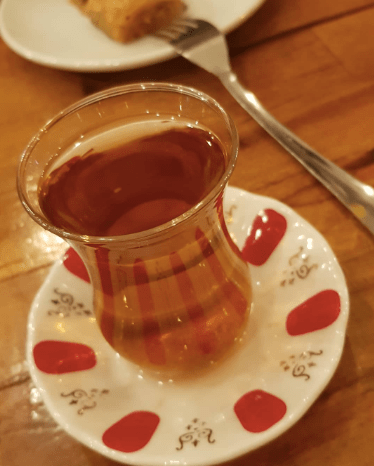
6. Caykur Rize Tea
The most widely used brand of tea in Turkey is Caykur from the northeast region of Rize. This province, known as the tea capital of the country has a mild climate suiting the green mountainsides covered with tea plantations. As the main trade of the region, estimates say every second adult works in the tea industry of Rize. Caykur produce many variations of tea although Rize Turist is the most widely sold. If you are in that region, visit the Caykur tea gardens for a refreshing brew and fantastic view over the city and its tea plantations.
7. Baklava
Baklava is a rich, sweet dessert pastry made of layers of filo filled with chopped nuts and sweetened and held together with syrup or honey. It is characteristic of the cuisines of the Levant and the broader Middle East, along with the Caucasus, Balkans, Maghreb, and Central Asia.
 Suzanarama